After 17 years of sailing on our Mariner 40 Ketch, Sea Trek, we were really used to having an autopilot do most of the steering for us. With Beach House, we did all of the steering ourselves, until now. Both the trip from South Carolina to the Chesapeake and the return to Florida required us to steer every foot of the way. We often mentioned on those trips how much we would like to have had some electronic help. An autopilot has always been on our to-do list, but we decided to wait and install the latest model just before departure time on our upcoming cruise. The time is now.


AGLCA Fall Rendezvous
.jpg)
The reason we have been a little negligent in posting lately isn't because we haven't had much to post. To the contrary, the reason is that sooooo many things are going on that we have been hard pressed to sit down at the computer and get caught up. Some big projects have been completed, and preparations are coming down to the wire for the beginning of our next big adventure. Anyone that has prepared for a two-year cruise understands how hectic and stressful that can be. So, you ask, what does that have to do with an AGLCA Rendezvous? Good question...
Ice Cream Stops Along the ICW
By Susan Landry, Published in September 2012 Issue Cruising World Magazine.
 How many of you will admit to
planning your overnight stops along the ICW to coincide with your favorite ice
cream shop? I know there are more than just the two of us who think about that
creamy, delicious cone waiting at our next favorite stop. After cruising up and
down the ICW for almost 20 years, we have definitely found some yummy
temptations.
How many of you will admit to
planning your overnight stops along the ICW to coincide with your favorite ice
cream shop? I know there are more than just the two of us who think about that
creamy, delicious cone waiting at our next favorite stop. After cruising up and
down the ICW for almost 20 years, we have definitely found some yummy
temptations.
How many of you will admit to
planning your overnight stops along the ICW to coincide with your favorite ice
cream shop? I know there are more than just the two of us who think about that
creamy, delicious cone waiting at our next favorite stop. After cruising up and
down the ICW for almost 20 years, we have definitely found some yummy
temptations.
But first, some interesting ice
cream tidbits. Although the Chinese have been making flavored ices well before
the birth of Christ, the Italians and French claim to have made the first
containing milk or cream in the 1600s. Ice cream’s first mentions in U.S. history
were around 1700.
Also, have you ever wondered why
the ice cream you get in parlors is so much tastier than anything you ever find
at the supermarket? That is because many of those creamy concoctions never see
the inside of a grocery store. Ice cream manufacturers, such as Greenwood in Georgia and
Working Cow in Florida,
produce their ice creams only for restaurants and parlors. But now, down to the
business of identifying those special places to feed your cravings.
Relocating The House Batteries

The next big project will be the installation of an inboard generator. The engine compartment of a Marine Trader 34 is not known to be the roomiest, so a few modifications are needed to make space available. The most logical placement choice is a shelf on the port side forward where we installed the house battery bank when we first bought the boat. Even then, we knew they would eventually have to be moved to accommodate the generator. There was still some work to be done to clean up the wiring, so it was time to move the house bank and tidy things up.
Can You Sink a Boat for Lack of a One Dollar Bolt??

Update After Tropical Storm Isaac

Riding The Storm Out, Waiting For Isaac

Care And Feeding Of The Ford Lehman Diesel

Midseason Maintenance Can Increase the Life of Your Boat
You have been told over and over that pre-season maintenance and service will ensure a trouble-free boating season. But will it really? A safe and happy boating season is a combination of preparation and prevention. It's so easy to hit the water as often as possible during the boating season and not want to spend time in the bilges or engine compartment. That's what spring commissioning is for. But a regular maintenance and service program during the season will go a long way to make the time we spend on the water truly enjoyable and safe. A little time on a regular basis will keep the breakdowns, failed equipment and need for towing to a minimum rather than a spoiled weekend while fishing or spending time with family and friends.
From A Fabric Bimini To A Hardtop In One Day

As many of our followers know, we built our own bimini back in June of 2009. The yellow Sunbrella has kind of been a trademark for Beach House wherever we go. But the Florida sunshine and the cold damp weather in the Chesapeake has taken a toll in just a few short years. We usually get at least five years out of a bimini, but not this time. Weighing the pros and cons of building another fabric bimini or finding an alternative has suddenly come to the top of the to-do list. This is another of those unexpected repairs that we thought we would deal with in another couple of years. But it is a boat after all.
A Bit Overwhelmed

I really haven't had to interview for many jobs. Most of the time I either knew the company and owner well or they knew me and approached me for a position. But the few times I have had an interview, one of the questions almost always asked was "what did I consider one of my major weaknesses." Right now that weakness has reared it's ugly head big time and I am feeling the effects. I never have to hesitate to answer the question because I know the answer all too well. I have always had a tendency to try and do too much at one time and start another project before I finished the previous one. After this weekend, that weakness has taken on a whole new meaning.
WiFi on the Boat - Part 3

It has been a while since we have posted any additional information on our highly successful WiFi set up on the boat. To really see how we have arrived at this point, you need to go back and read our previous posts starting with Part 1 and then Part 2. Our original WiFi set up worked great right up until the day we took it down and switched over to this new system. We have been using this for some time now, but I am just getting around to posting the how to and our results to date. The reason for the change was nothing more than seeing what was new and trying out this system because we have had a lot of positive feedback from other boaters. Our experience has been very positive although not quite the "wow" we expected.
Road Trip And A Short Cruise

We're often asked to give presentations to boaters during their organization's meetings and rendezvous. While we lived in Maryland for two years, I had to travel to Florida often to give these presentations, and now that we have moved back to Florida, of course I was asked to be a speaker at the AGLCA Rendezvous in Norfolk, Virginia. Susan and I recently joined the AGLCA (America's Great Loop Cruisers' Association) in preparation for our Great Loop adventure, which by the way will begin in just six or seven short months, if all goes as planned. My presentation for the Rendezvous was to be cruising the Delaware Bay, New Jersey Coast and the Hudson River. Everyone seem enthused and very interested, and we received lots of positive comments afterward.
Boat Renaming Ceremony
Doing it the right way staves off the possibility of bad luck (I don't remember where I found this, so sorry if I don't give the original Author Credit)
 Superstition still plays a significant role in boaters’ lives. The sea, hardly changed in all the eons since its creation, is still a source of mystery and wonderment. Half of the Earth’s surface is covered by abyssal seas where light never penetrates, but where life nevertheless exists—sometimes in outlandish forms—in conditions of unimaginable pressure and Stygian darkness. Little wonder, then, that frail human beings plying the interface between the unruly atmosphere and the fearsome oceans should seek help by performing certain rituals known to their ancestors, and turning to their ancient gods for protection.One superstition still widely held concerns the renaming of a boat, which, in the United States at least, is held to be unlucky. The answer is to hold a denaming ceremony before you rename your boat. You can make up your own ceremony, or you are welcome to use this one, which has been used with every appearance of success. It is now widely distributed on the Internet, but it is repeated here for your convenience.

Raising A Few Brows

The teak brows were probably the least attractive pieces of wood on the boat and a pain to keep up. All of the screws that secured them to the sides of the cabin have been a source of leaks that we knew we needed to deal with soon. We did some caulking early on to stop the water intrusion, but caulking is just the proverbial band-aid, and more drastic action was necessary to resolve it once and for all. Just as with the flybridge, removal has been my choice since day one and the time has come to tackle the project and check it off the list.
The Flybridge Makeover That Never Ends

30-Year-Old Boat Plumbing Replacement

Moving The Starting Battery

Anchoring Along the Intracoastal – Norfolk to the Georgia/Florida Border
By Susan Landry
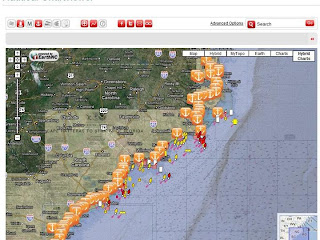
Our cruising posts in the past have always included our favorite anchoring spots. As the snowbirds head south this fall, some for a repeat performance, some for the first time, they’ll be looking for secure anchorages for the night in the ICW. We try to average about 50 miles per day and what follows are our suggestions without marina stops.
What Do You Do Once You're In The Bahamas?

This is a follow to our post, What Cruisers Want To Know About The Bahamas.
You've done all of your homework. You've picked the perfect weather window. You were in awe as the dark blue of the Gulf Stream gave way to the crystal clear, but shallow waters of the Bahamas Banks. The feel of accomplishment just can't be describe. You have arrived, so now what? The answer is almost as endless as the Island chain itself.
Subscribe to:
Posts (Atom)